
Proper daily maintenance is essential for keeping CNC machines operating efficiently, accurately, and safely. Regular maintenance not only extends machine lifespan but also reduces unexpected downtime, improves machining quality, and lowers repair costs. By following simple daily maintenance procedures, operators can ensure stable performance and reliable production.
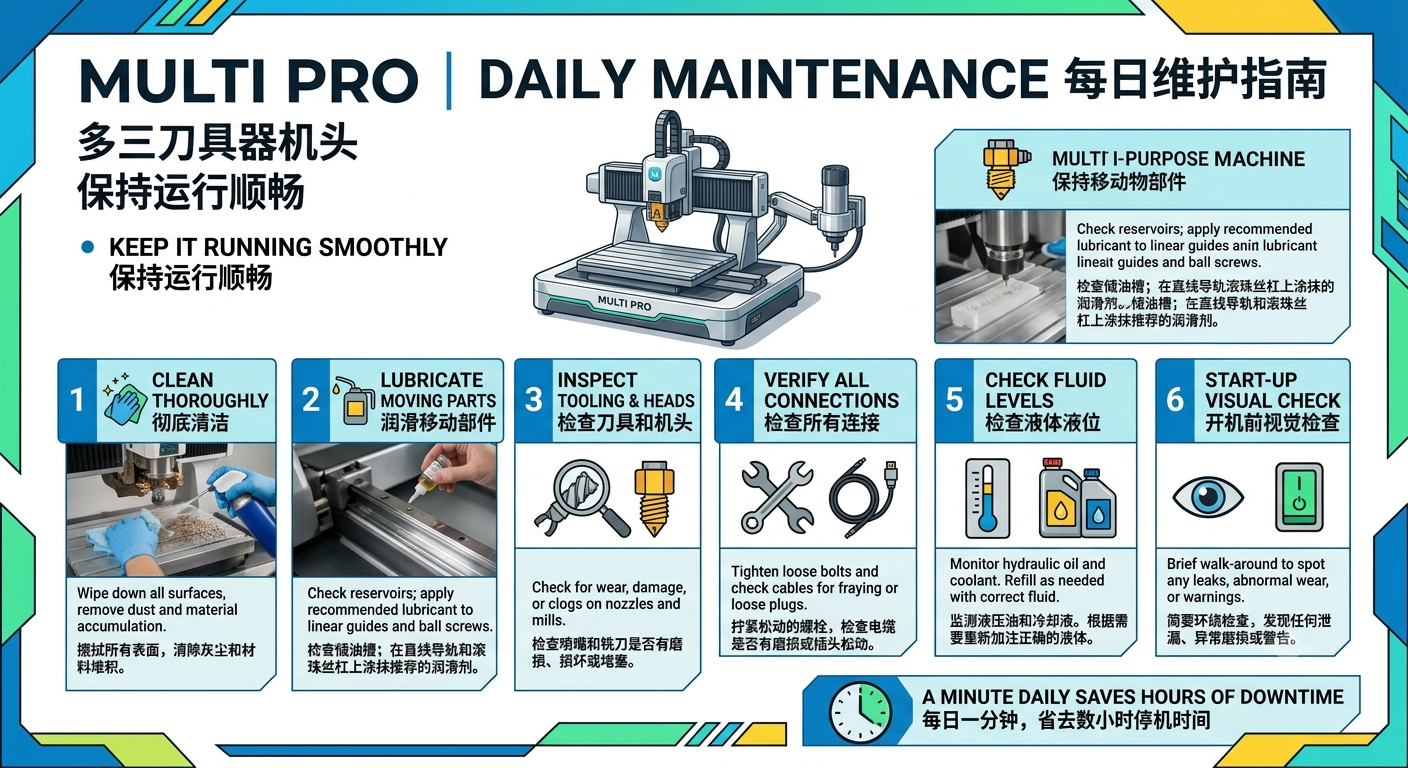
The first step in CNC maintenance is to keep the machine clean. Chips, dust, and coolant residue can accumulate around the work area, machine bed, and moving components. Operators should remove metal chips regularly and clean machine surfaces to prevent damage and maintain machining accuracy.
Checking lubrication systems is another important daily task. Proper lubrication reduces friction between moving parts such as guideways, ball screws, and bearings. Operators should confirm that lubrication levels are sufficient and check for any abnormal oil leakage. A well-maintained lubrication system helps prevent premature wear and improves machine performance.
Coolant inspection is also necessary for CNC operations. Coolant helps control cutting temperature, improves tool life, and maintains surface finish quality. Operators should check coolant levels, remove contaminants, and ensure proper coolant flow to avoid overheating and poor machining results.
Before starting production, operators should inspect cutting tools and tool holders. Worn or damaged tools can affect dimensional accuracy and surface quality. Regular tool inspection helps identify problems early and prevents defective products during machining.
Electrical and control systems should also receive daily attention. Operators should check control panels, cables, emergency stop buttons, and warning indicators to ensure everything functions correctly. Any unusual alarms or error messages should be recorded and reported immediately.
Machine accuracy can be maintained by checking positioning performance and unusual movements. Strange noises, excessive vibration, or abnormal machine behavior may indicate mechanical problems that require professional inspection.
At the end of each working day, operators should perform a basic shutdown procedure. Cleaning the machine, removing chips, checking fluid levels, and recording maintenance information create a reliable maintenance history for future reference.
In conclusion, daily CNC maintenance is a simple but essential practice for modern manufacturing. A clean, well-lubricated, and properly inspected CNC machine can deliver higher accuracy, longer service life, and better production efficiency. Consistent maintenance helps companies reduce costs and achieve stable machining performance.